Tea is on, come on in to the Studio
…my place of peace and happiness where time stands still and the world opens to my imagination.
Entries from the Pollinate Panoply Field Archive
The Tarn, France
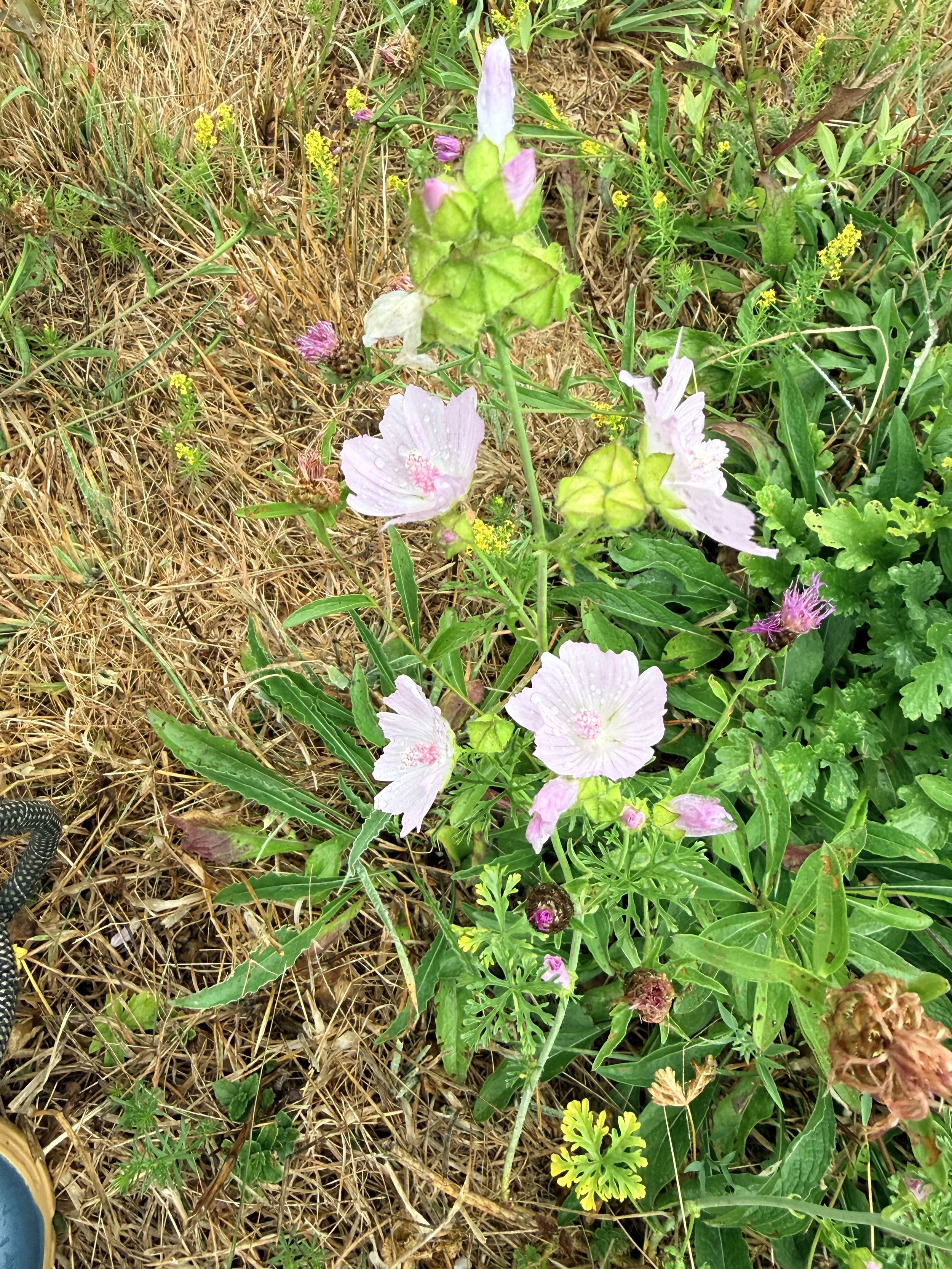
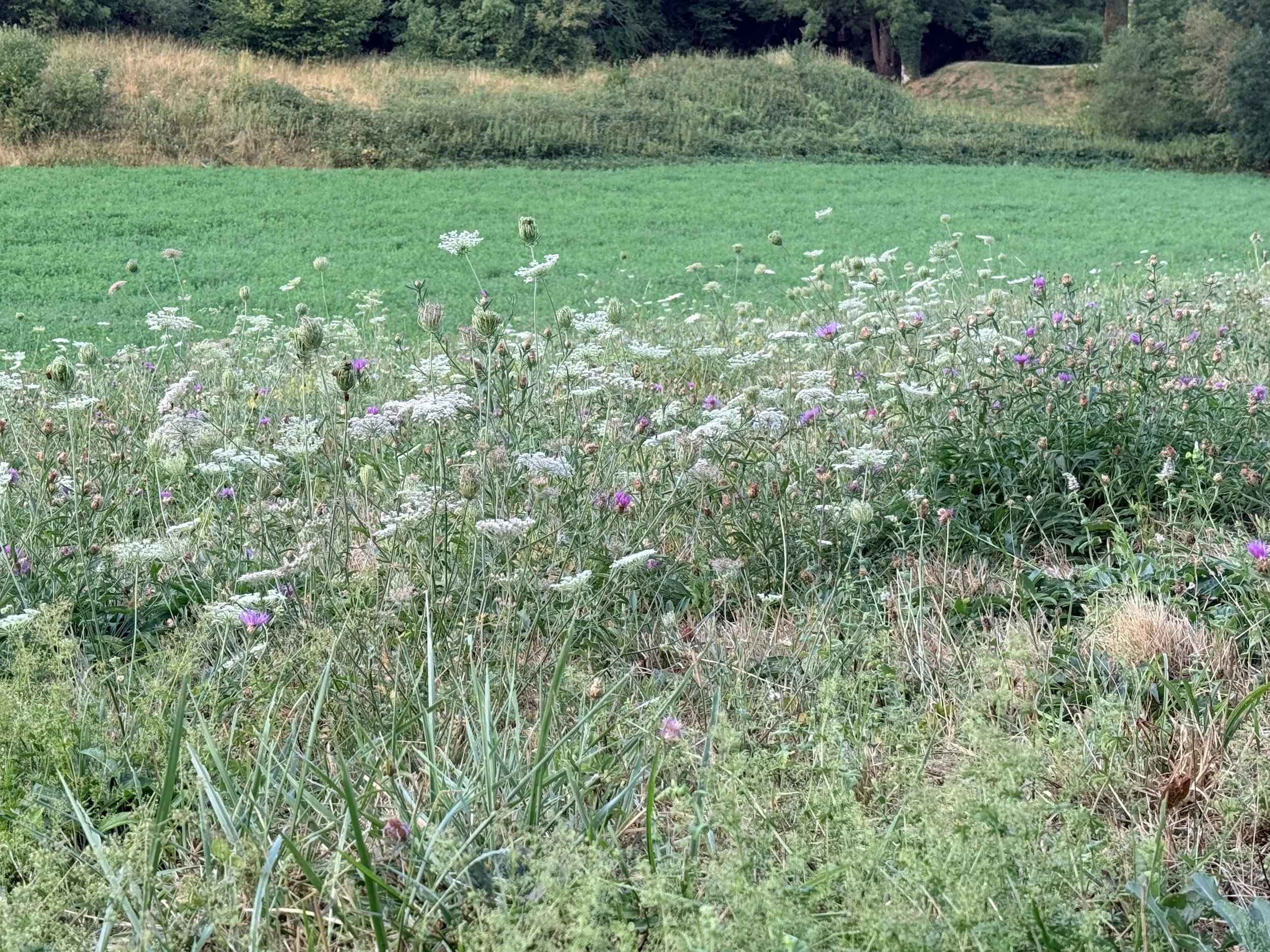
As an American, who has moved to France in her middle years, I am often lost in the language and the culture. I am never lost in nature. Spending time in the forests, meadows, streamsides and prairies offers me endless opportunities for inspiration and beauty. Nature is the ultimate artist. In the humble hayfields around our small mountain village, wildflowers take turns blooming throughout the summer. Pale pink mallow blooms next to vivid yellow woodruff. Violet knapweed creates bright punctuations of color while graceful queen anne’s lace blends everything together with her creamy white and soft greens. Golden brown grasses clump together and give a sense of proportion.
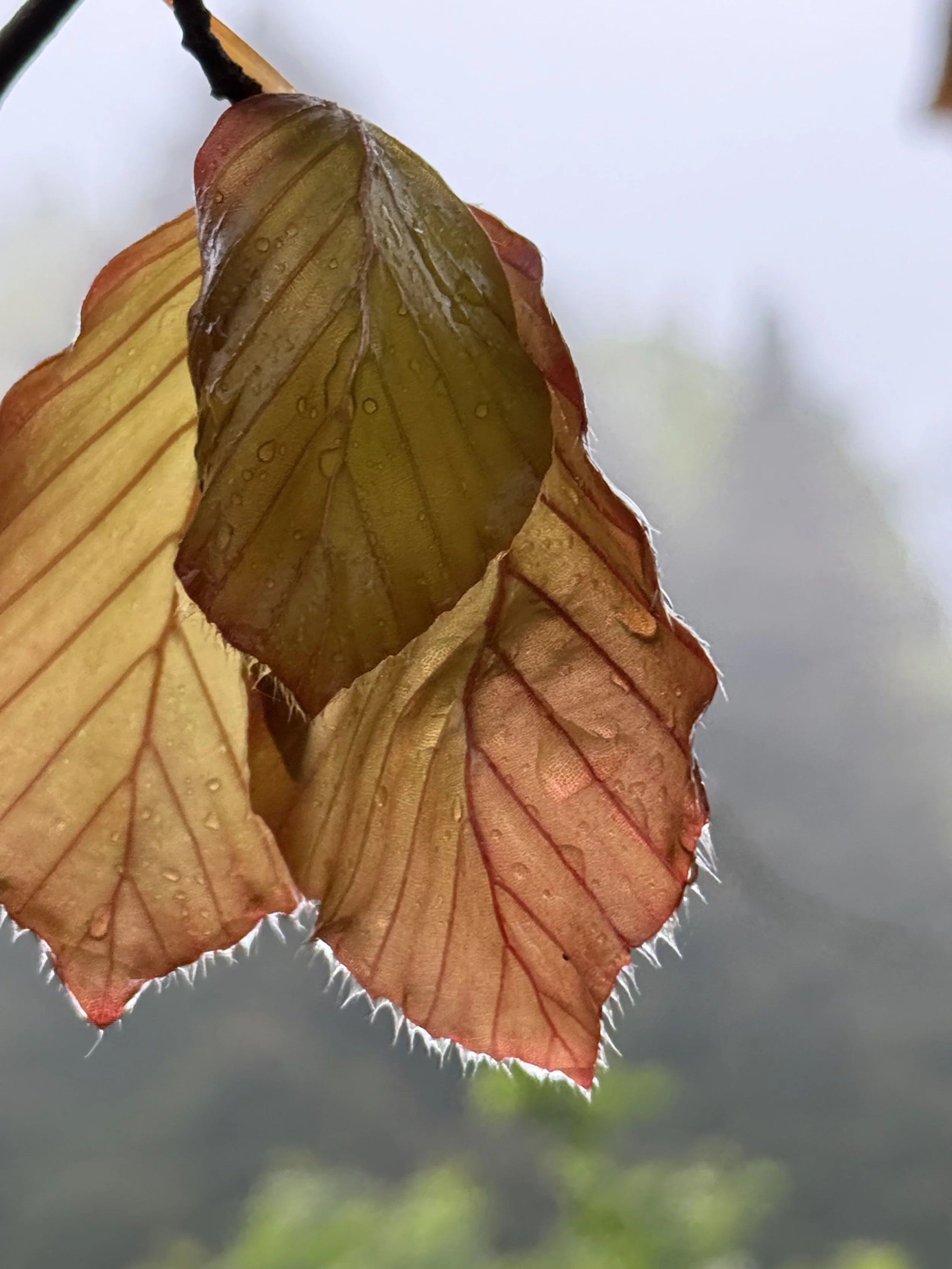
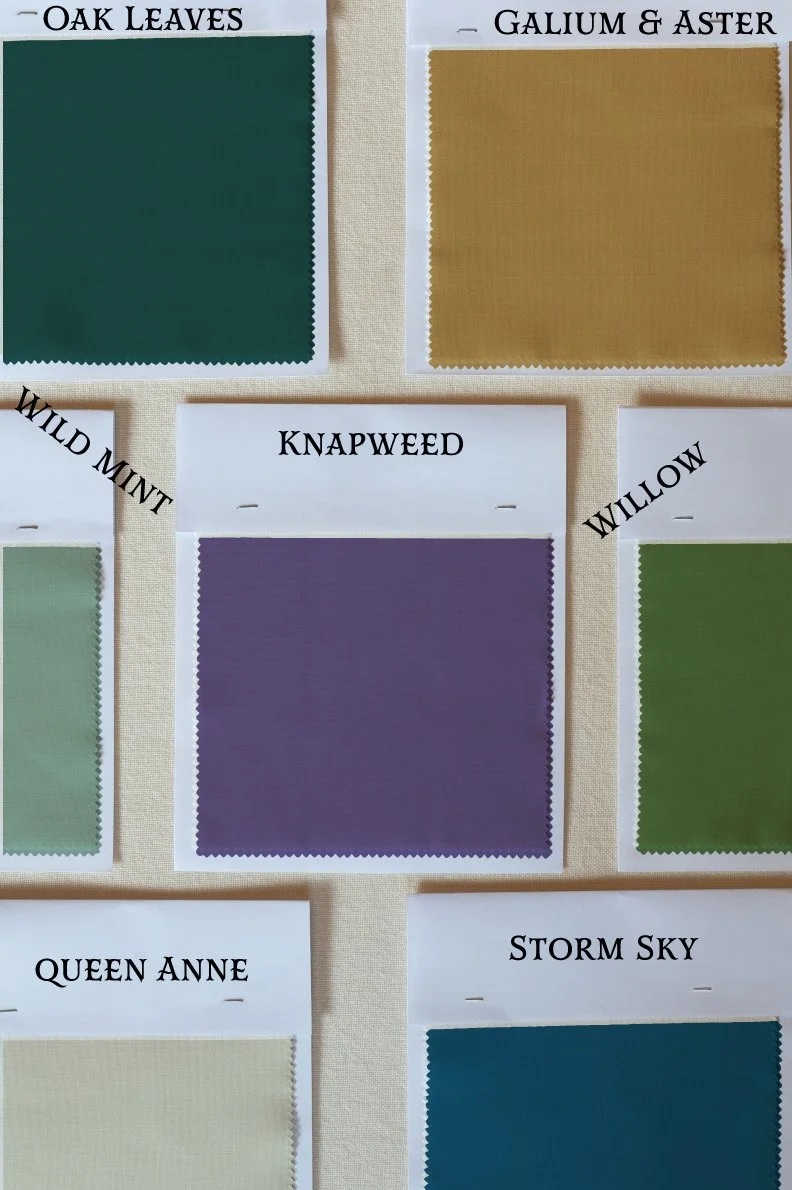
In my work as a professional landscaper, I used color, form, and empty space in wild landscapes to guide my domestic designs. I have employed those same principles into my surface pattern designs. It is a kind of meditation for me that begins with long walks in the forest, or along streams and rigole. The dog and I sit quietly in the meadow and watch how the grasses move in the breeze, like ripples on a golden sea. A late fall rainstorm creates visible edges on the beech leaves and the sun through the damp leaves reveals the most subtle and sublime shades of rose and ochre. This palette that nature works with resembles the colors found in Art Nouveau and Arts & Crafts design traditions. It is no accident that William Morris chose the colors he worked with. I imagine that he, too, spent countless hours in his garden and walking the heaths and hedges of the English countryside. I imagine he went home and ground his pigments to recreate the golden yellows, sage greens, heather rose, violet harebells, pale green willows, deep green oak leaves and burnt sienna chestnuts.
Designing by hand is a sensual meditative process. The scent of watercolors & india ink. The gummy eraser across heavy sketching paper. The pastels that stick to one’s elbows and knuckles. It is also a lesson in patience and self-acceptance. I am not naturally a painter or sketcher. My art has always been in the imagining and placement of plants. I often fall far short of my imagination when I take up paper and pencil. But, with continued observation, and regular practice, my drawings are becoming increasingly pleasing to me. Perhaps this is one of the greatest gifts that art gives to the practitioner. It inspires us to slow down, to pay attention, and to honor the process of cultivating our own sense of well-being. It encourages one to delight in the discovery of our own joy.
Field Notes July 21, 2026
The Tarn, France
Recently, I spent the morning wandering around Lautrec. The birthplace of the very famous artist, Toulouse Lautrec, it is a charming, small village set amidst rolling pastures and fields of sunflowers.
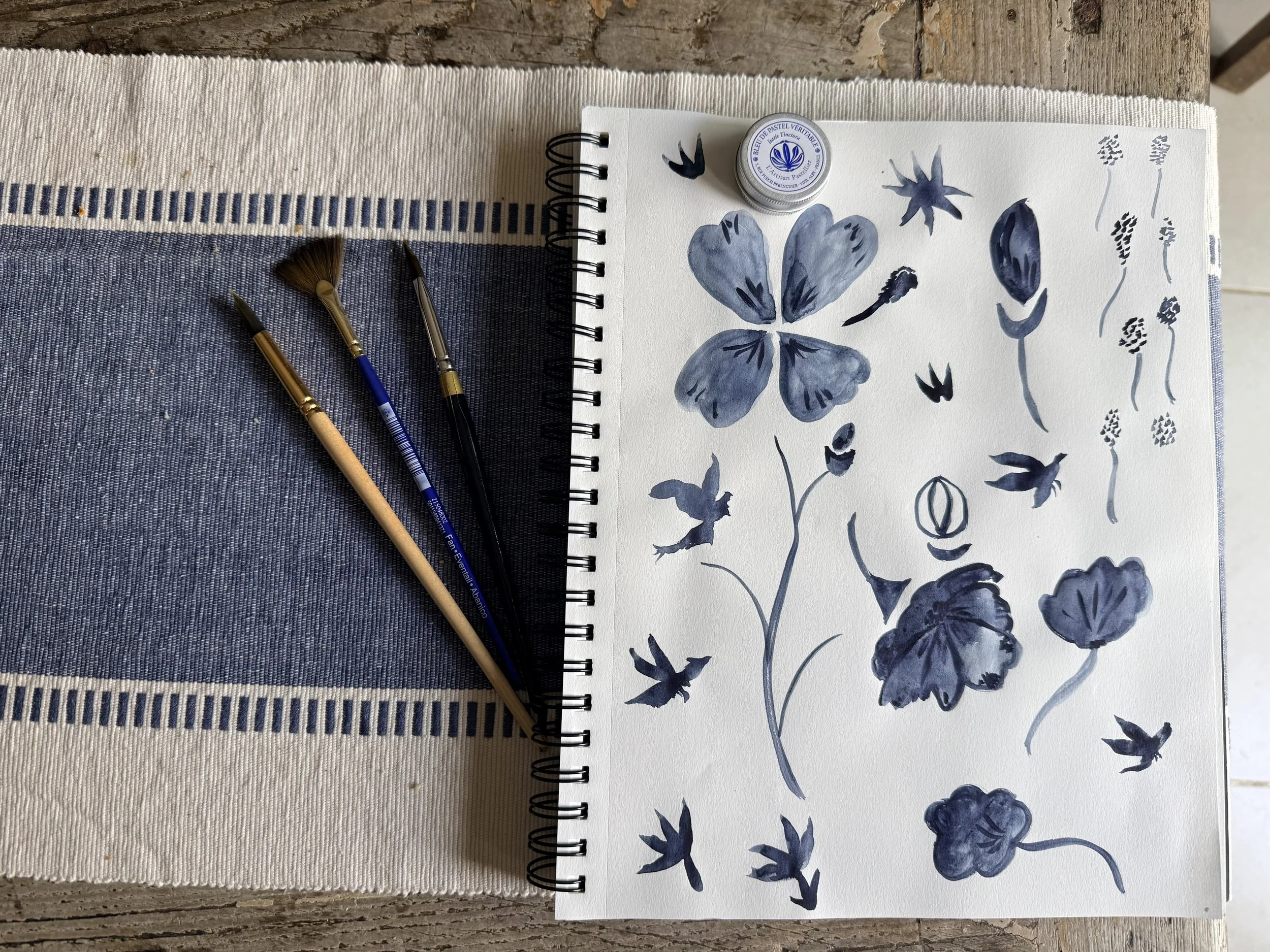
It was a rare moment out without my dog and I savoured every minute. I entered into little shops and garage sales with a mind wide open for discovery. In one shop, I found a little metal tin of Pastel Bleu watercolor. My mother, a fabulous artist, uses this and so I bought a tin for her and, on a whim, one for myself. It has become my favorite medium for design work.
Pastel bleu is a pigment created from the Isatis tinctoria plant. It was used by the Celts and the Gauls to dye their skin blue during battle. It is said that it also has a mildly hallucinogenic effect. During the Renaissance period (1450-1560), pastel bleu became an important source of blue dye in Europe. Before this time, the only blue dye available was Indigo, which had to be imported from Asia and was terribly expensive. The region of France around Toulouse and Albi became extremely wealthy, as a result. Napoleon then revived the use of it to dye his military uniforms blue and the region had another economic boom. In the 1980’s into current time, it once again has come into fashion. We live in the heart of pastel bleu and you see it on window shutters, clothing, and as cosmetics and skin care.
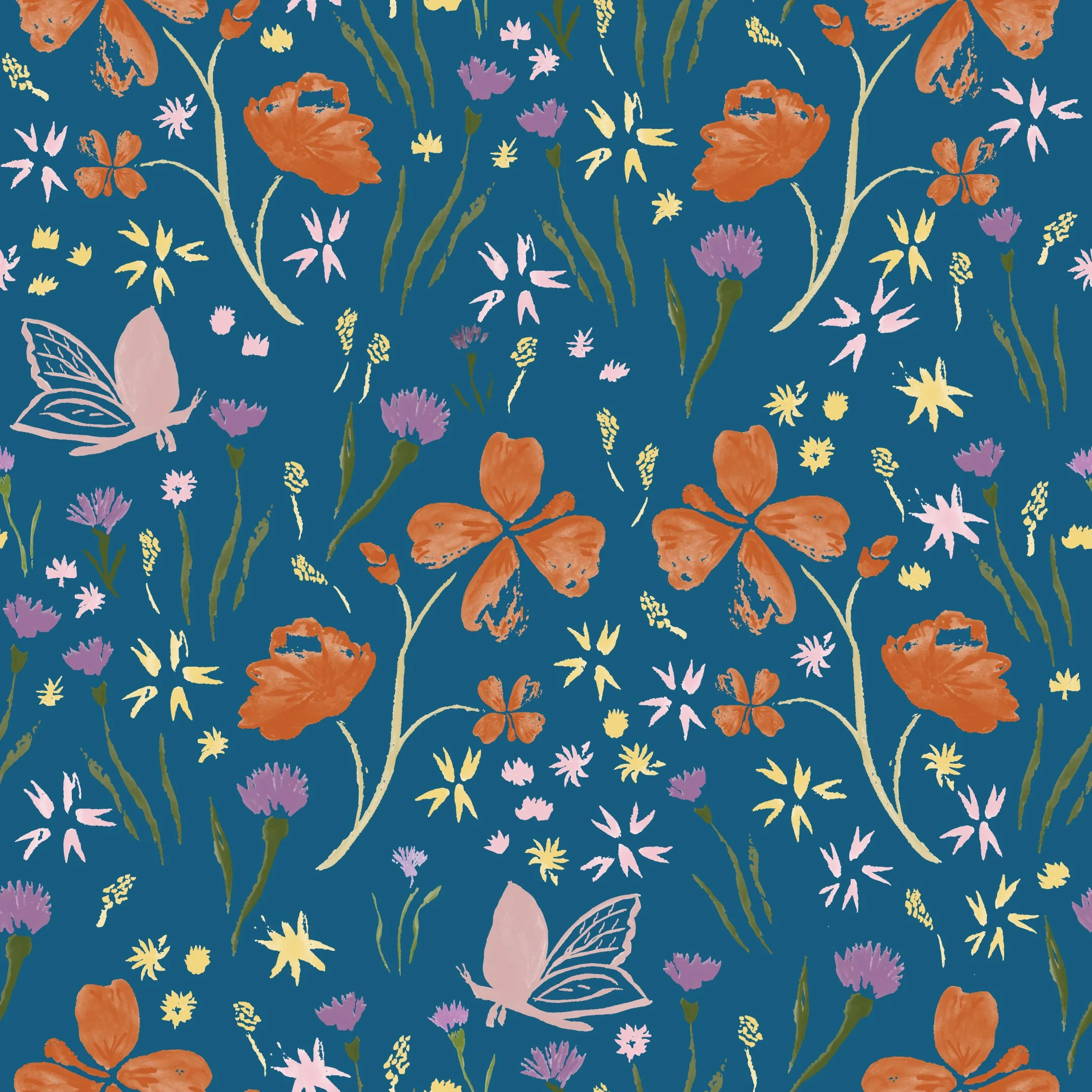
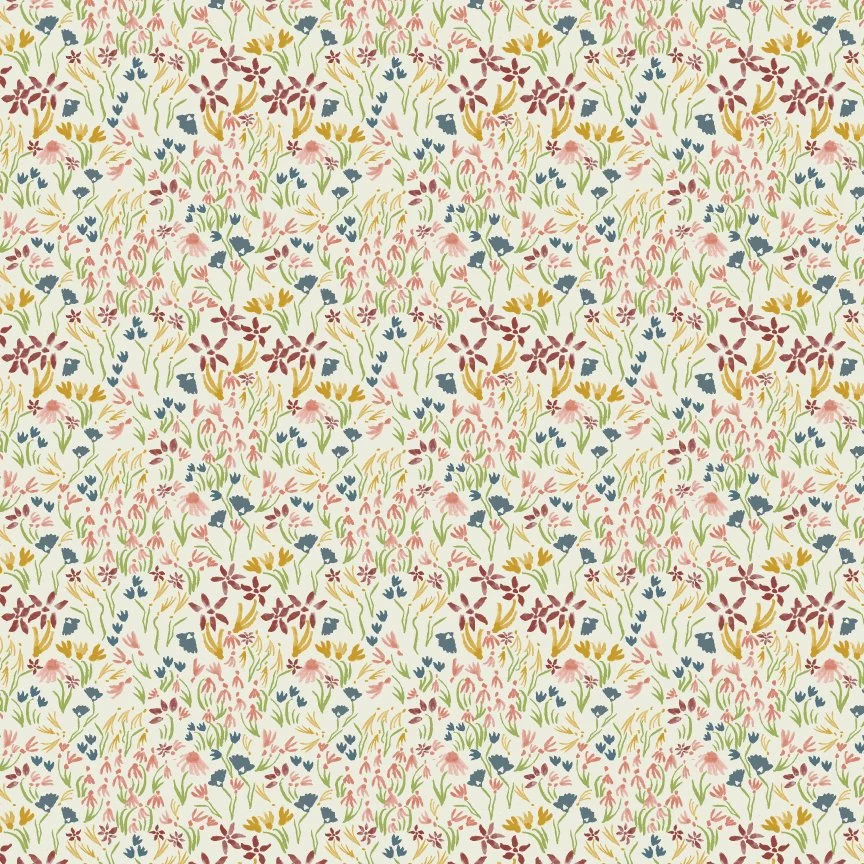
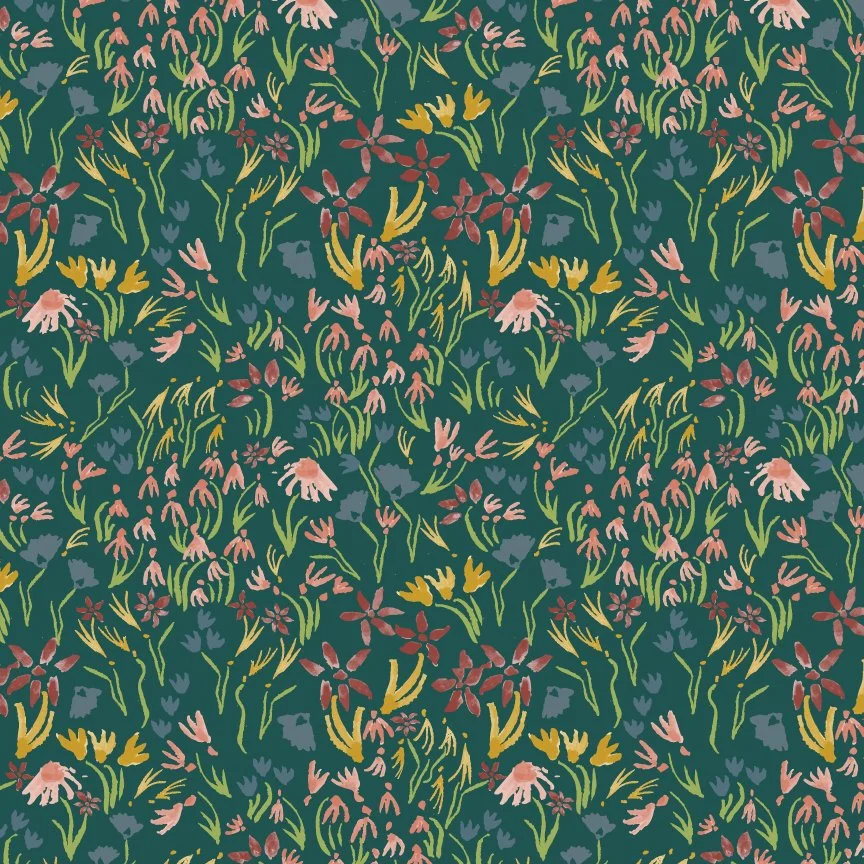
I am so excited about my first watercolor design: Watercolor Meadow. It is inspired by the wildflowers that grow so happily in our hayfields and meadows. I am working on a new design that will feature the delicate wild mallow, delicate yellow bedstraw and vivid knapweed. I only recently learned this technique in Bonnie Christine’s Immersion course and I can’t wait to do more!

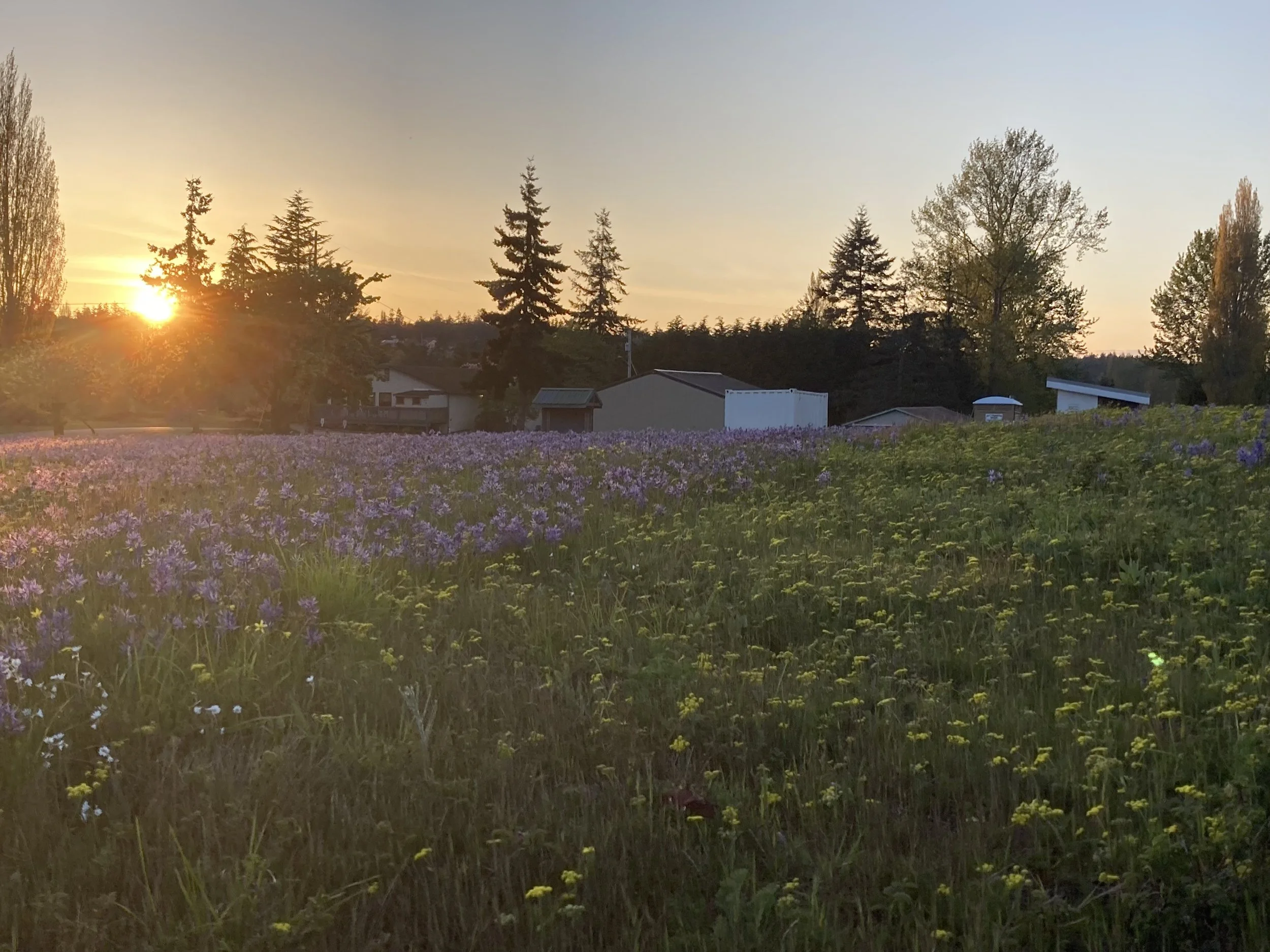
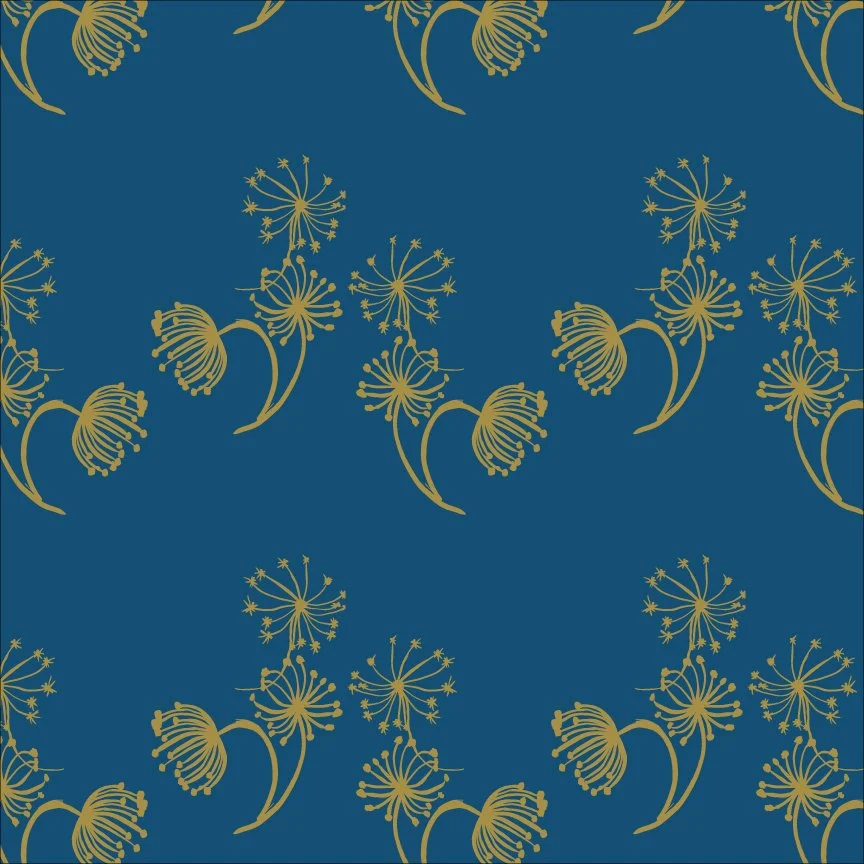
Queen Anne’s Lace
Field Notes June 15, 2026
The Tarn, France
Today I spent most of the day walking through the freshly mown hayfields. Enormous rolls of hay punctuate the pastures like musical scores written by giants. As I walk the field, mint is crushed underfoot and its sharp scent perfumes the hot summer air. Along the edges of the fields, borders left unmown are full of Queen Anne’s Lace and wildflowers. Delicate, cream, foamy flowers float above a sea of sulphur yellow Galium, violet Centaurea and pale purple Scabiosa. Butterflies in shades of buttery yellow and tangerine alight upon the flat flower heads. Red and black beetles forage among complicated seed structures that look like Victorian ironworks. I get down on my knees to zoom in to capture the delicate, intricate details and discover tiny ants moving pollen from one flower to another in long, organized lines. The more I zoom in, the more I find. It is like an Escher print that gets only more complex the more I look. Nature is endlessly fascinating.
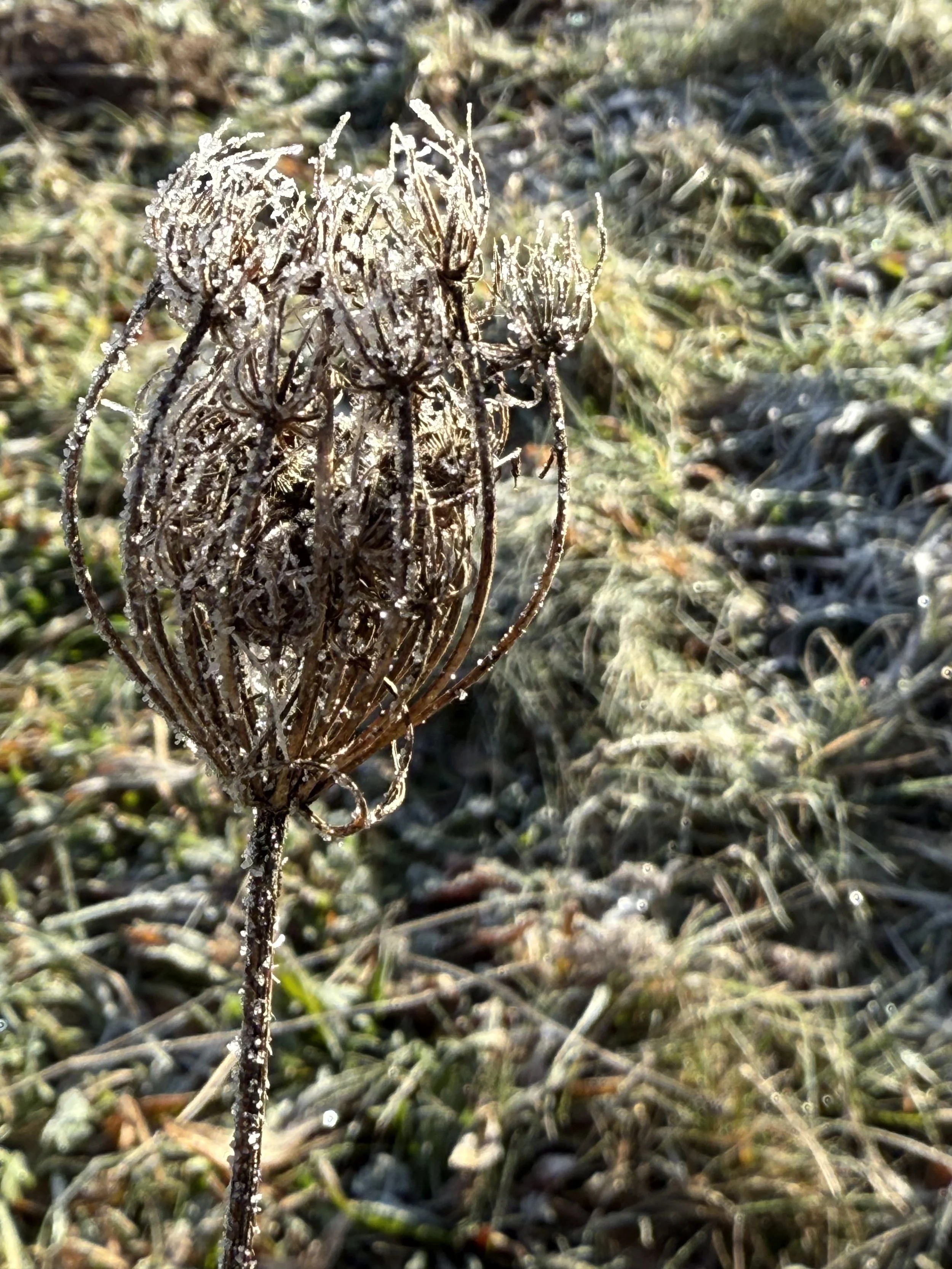
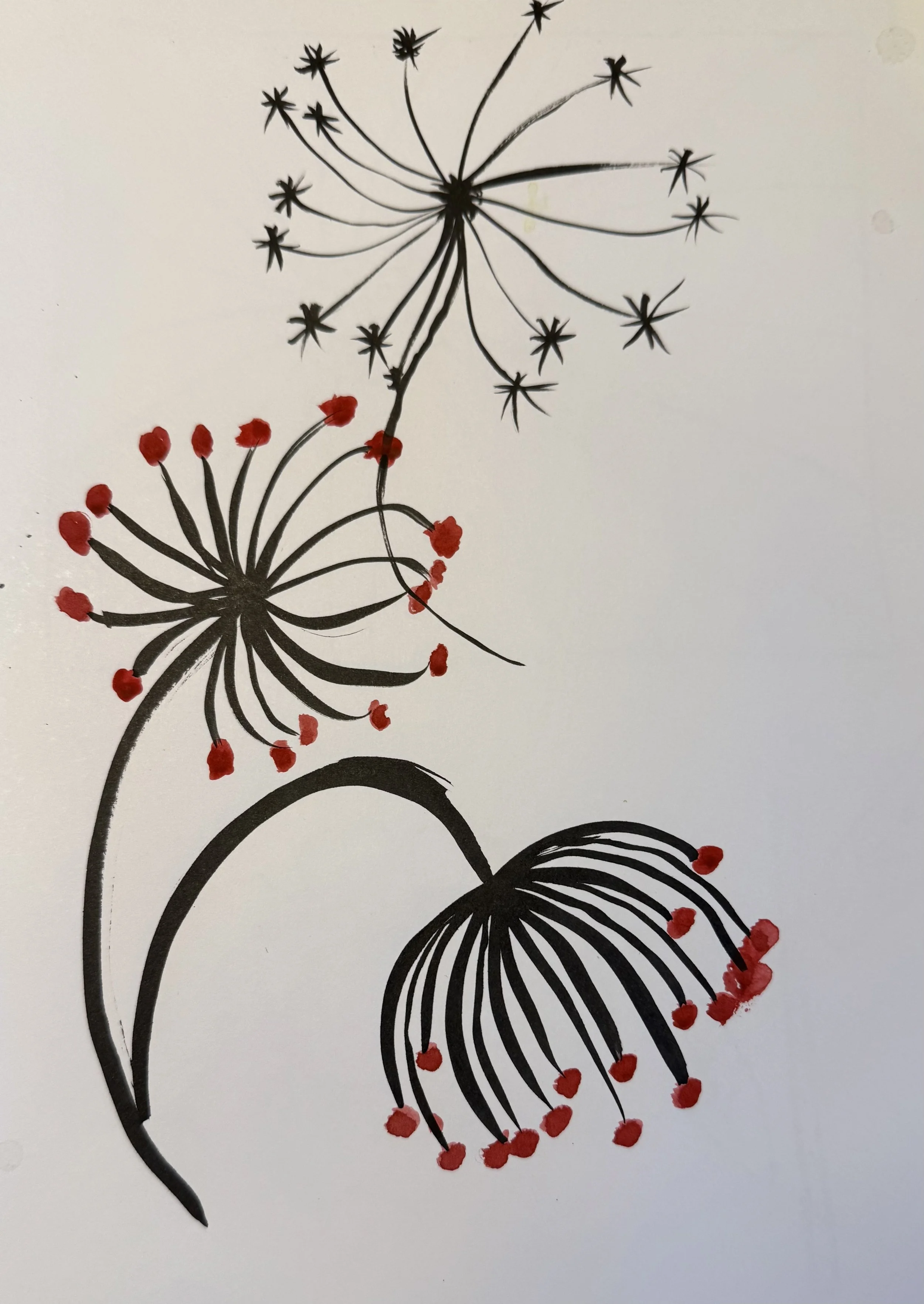
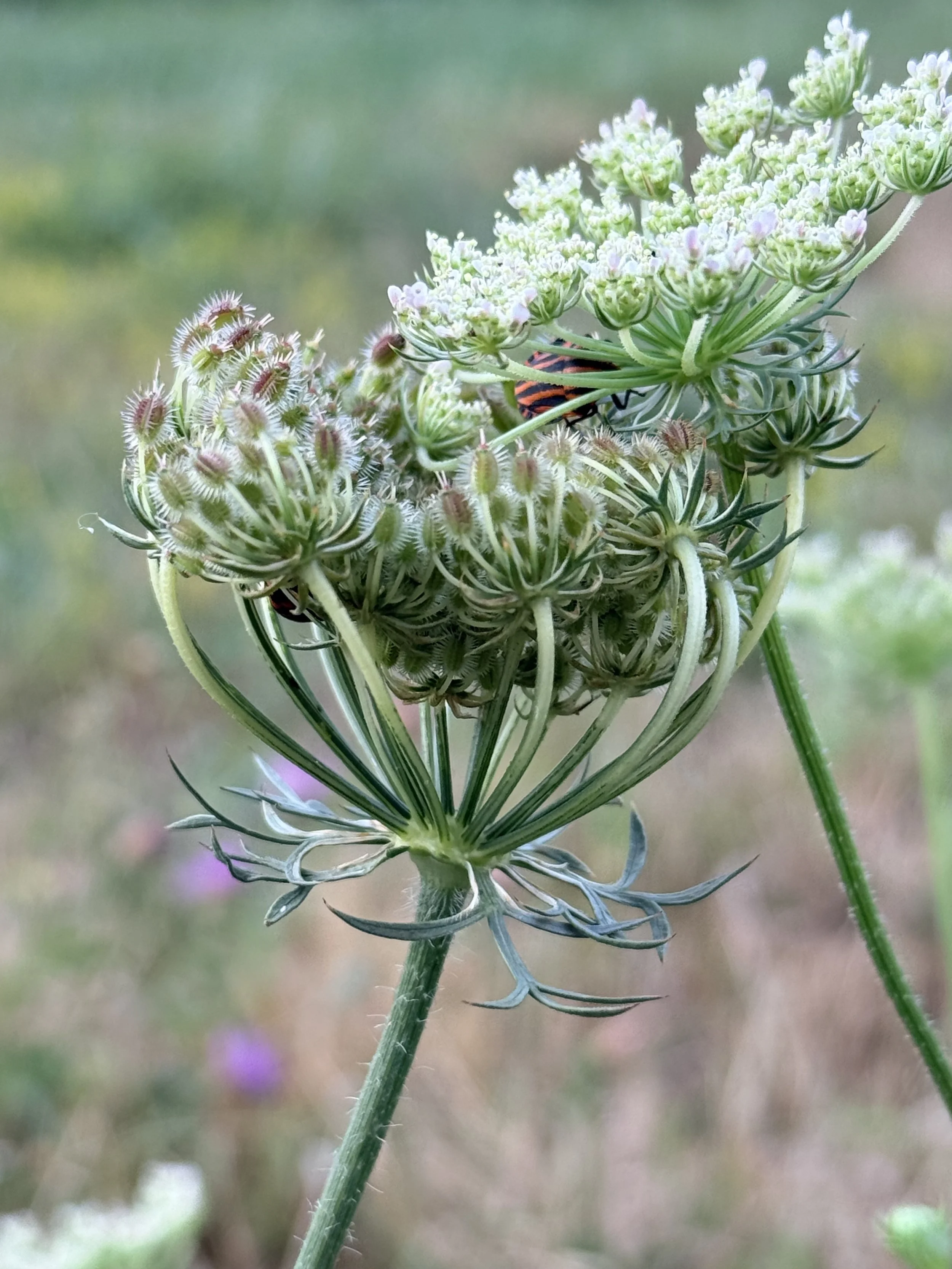
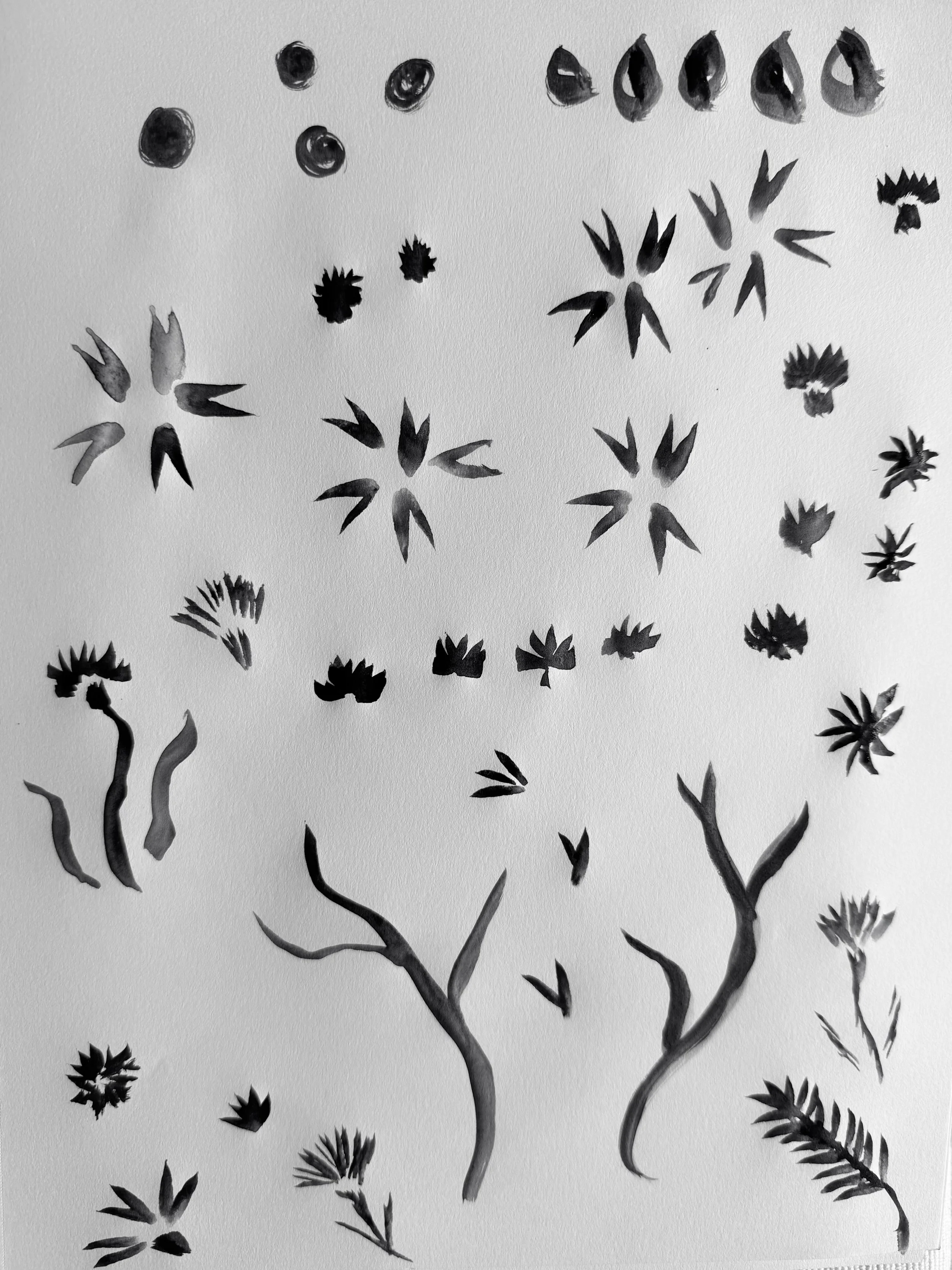
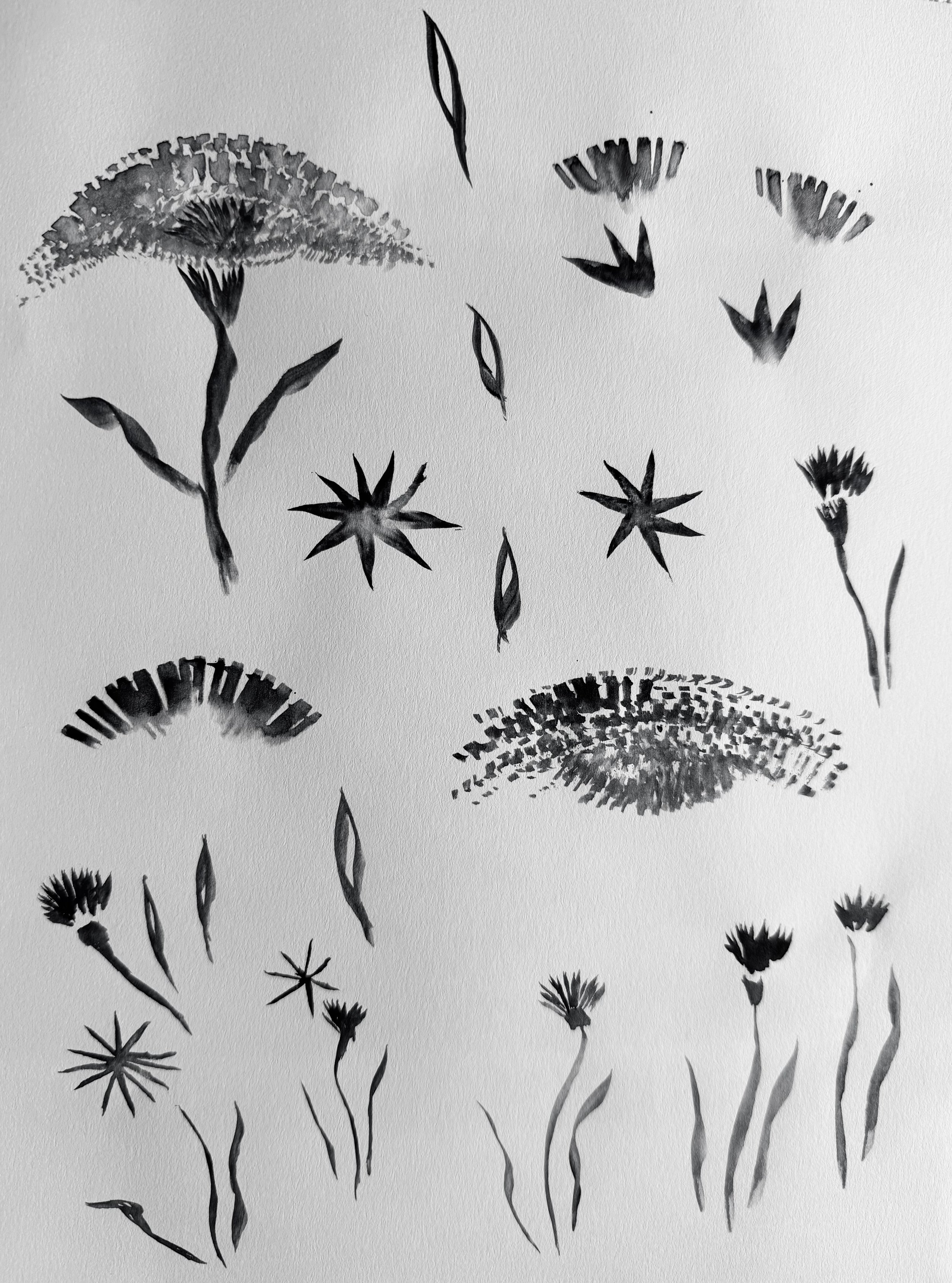
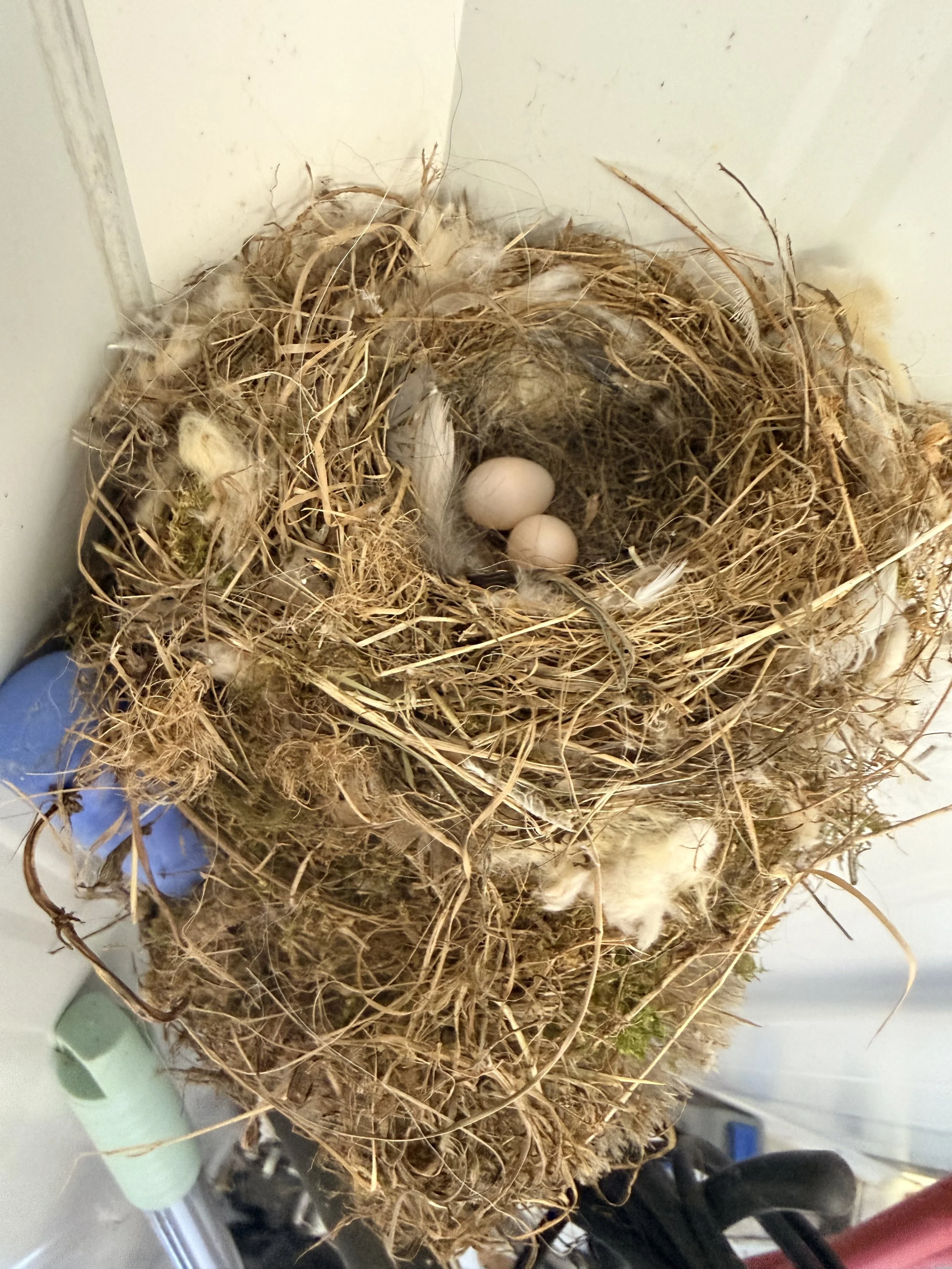
I gathered queen anne’s lace flowers and seed heads to take home as models for drawing. I will try painting them with India Ink to capture the movement. In a corner of the shelter at the edge of the pasture was a beautiful bird’s nest. Two eggs lay nestled inside.
Colors from William Morris that will do nicely for this design.